
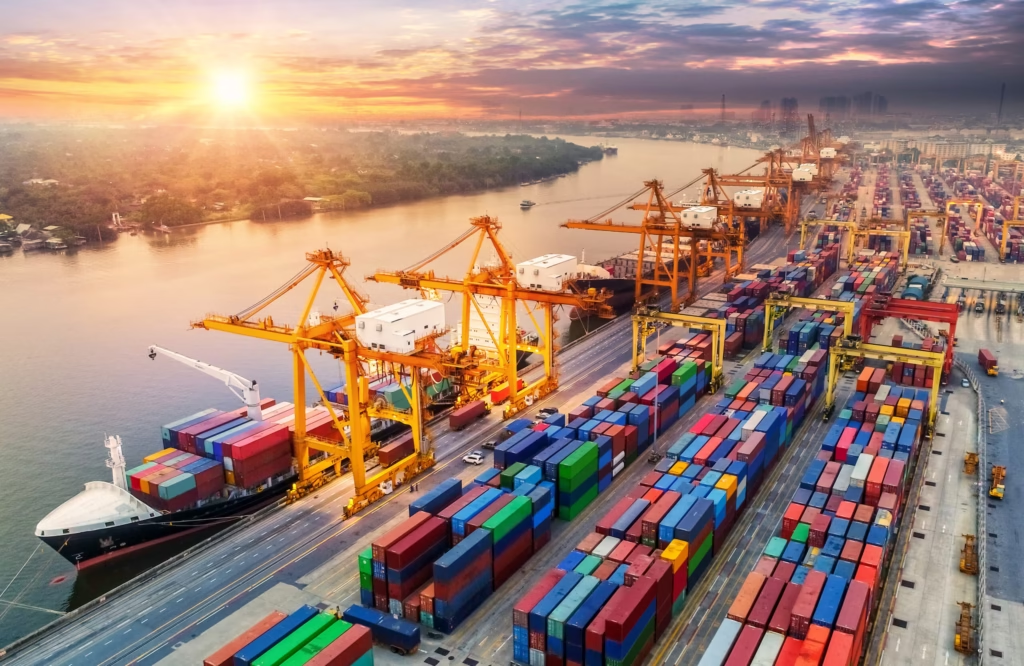
India depends heavily on the sea for trade, but its role in global shipbuilding remains surprisingly small. Nearly 95% of the country’s merchandise trade by volume and about 70% by value is transported through maritime routes. However, India contributes less than 1% of global commercial shipbuilding, leaving a significant gap between its maritime potential and manufacturing capability.
Source: Ministry of Ports, Shipping and Waterways – https://shipmin.gov.in/ | UN Trade and Development (UNCTAD) – https://unctad.org/
Fresh developments suggest this gap is finally receiving serious attention. The Central Government has expanded policy support for domestic shipbuilding through initiatives such as the Maritime Amrit Kaal Vision 2047, the Shipbuilding Financial Assistance Scheme (SBFAS), the Shipbuilding Development Scheme (SbDS) and efforts to strengthen shipbuilding and ship repair infrastructure. Together, these initiatives indicate that shipbuilding is becoming an important part of India’s broader industrial strategy rather than remaining a niche sector.
Source: Ministry of Ports, Shipping and Waterways – https://shipmin.gov.in/ | Directorate General of Shipping – https://www.dgshipping.gov.in/
Shipbuilding Drives Industrial Growth
Every commercial vessel supports an entire manufacturing chain. Steel, marine equipment, engineering, electronics and logistics all benefit from a single shipbuilding project, making the industry far more influential than its size suggests. Therefore, one shipbuilding project generates business opportunities across multiple industries instead of benefiting only the shipyard.
China, South Korea and Japan built their leadership by developing complete industrial ecosystems rather than focusing only on production capacity. China currently accounts for more than half of global commercial shipbuilding output by compensated gross tonnage, while South Korea leads in high-value LNG carriers and Japan continues to compete through engineering quality and manufacturing efficiency.
Source: UN Trade and Development (UNCTAD) – https://unctad.org/ | Clarkson Research – https://www.clarksons.com/
Geography has already given India a strong maritime foundation. The larger challenge is converting those natural advantages into globally competitive industrial capacity. The country has a coastline of more than 7,500 kilometres, 12 major ports and more than 200 notified non-major ports. However, infrastructure alone does not make a country a maritime leader. Consistent quality, reliable suppliers and timely delivery are equally important when global shipping companies decide where to place new orders.
Source: Ministry of Ports, Shipping and Waterways – https://shipmin.gov.in/
India’s Maritime Strategy
India’s renewed focus on shipbuilding is backed by policy as well as investment. Under the Maritime Amrit Kaal Vision 2047, the Government aims to strengthen domestic shipbuilding, expand ship repair capacity and improve India’s position in the global maritime economy. Supporting programmes such as the Shipbuilding Financial Assistance Scheme (SBFAS), the Shipbuilding Development Scheme (SbDS) and the Maritime Development Fund are designed to improve financing, modernise shipyards and encourage private sector participation.
Source: Ministry of Ports, Shipping and Waterways – https://shipmin.gov.in/ | Directorate General of Shipping – https://www.dgshipping.gov.in/
The impact of these policies is gradually becoming visible through new investments in shipbuilding infrastructure, the expansion of ship repair facilities and technology partnerships involving Indian shipyards. These developments suggest that India is gradually building a stronger maritime manufacturing base instead of relying only on port infrastructure.
Competing Through Industrial Capability
China dominates global shipbuilding because it has built an integrated manufacturing ecosystem over several decades. Competing with that scale alone would be difficult. However, India has an opportunity to grow in specialised segments such as green vessels, offshore support ships, coastal cargo vessels, defence-linked manufacturing and ship repair, where quality, engineering capability and reliability often matter more than production volume.
Source: UN Trade and Development (UNCTAD) – https://unctad.org/ | OECD – https://www.oecd.org/
India’s defence shipbuilding capabilities also provide a strong foundation. Public sector shipyards have successfully delivered aircraft carriers, destroyers and other advanced naval platforms, creating engineering expertise that can strengthen commercial shipbuilding. This experience gives Indian manufacturers an advantage in handling complex, high-value projects where precision and technical capability are critical.
Building a Maritime Ecosystem
Recent investments have generated optimism, but capital alone will not make India a global shipbuilding hub. The industry still faces challenges including high financing costs, dependence on imported marine equipment, limited domestic supplier networks and longer project delivery timelines. These issues directly influence global buyers when selecting where to place shipbuilding contracts.
Winning international orders depends as much on reputation as it does on cost. Global shipowners look for consistent quality, timely delivery and long-term service support before choosing a shipyard. Building that confidence requires consistent execution across the entire supply chain, from component manufacturers to final delivery.
Although the road ahead remains demanding, one positive sign is becoming increasingly clear. India is no longer discussing shipbuilding only as a port-related activity. It is gradually treating the sector as an integrated manufacturing industry that can strengthen exports, generate skilled employment and support broader industrial growth.
Conclusion
India already has many of the ingredients needed to strengthen its position in global commercial shipbuilding, including a strategic coastline, expanding port infrastructure, a skilled engineering workforce and a supportive policy framework. Recent policy initiatives indicate that shipbuilding is becoming an important part of the country’s manufacturing agenda rather than a standalone industry.
India’s maritime ambitions will ultimately be judged not by the number of ports it operates, but by whether global shipowners begin choosing Indian shipyards for quality, reliability and long-term partnership. That transition will determine whether the country becomes a larger participant in global commercial shipbuilding or remains primarily a trading nation. For a country that already powers global trade through its ports, strengthening domestic shipbuilding could become the next step in building a more competitive maritime economy.
Frequently Asked Questions
1. Why is shipbuilding important for India’s economy?
Shipbuilding supports industries such as steel, engineering, electronics and logistics while creating skilled jobs. It also strengthens exports and reduces dependence on foreign-built vessels.
2. Why does India contribute less than 1% to global shipbuilding despite having a long coastline?
India has strong maritime advantages, but limited shipbuilding capacity, supplier networks, financing and delivery efficiency have restricted its global market share.
3. Can India compete with China, South Korea and Japan in shipbuilding?
Matching their production scale will take time, but India can build a competitive position in specialised segments such as green vessels, ship repair and defence-linked manufacturing.
4. What is the Government doing to support the shipbuilding industry?
The Government has introduced initiatives including the Maritime Amrit Kaal Vision 2047 and financial support schemes to encourage investment, modernise shipyards and expand domestic capabilities.
5. What is the biggest challenge India must overcome to become a global shipbuilding hub?
Beyond investment, India must consistently deliver high-quality ships on time while strengthening its domestic supply chain and earning the confidence of global shipowners.