
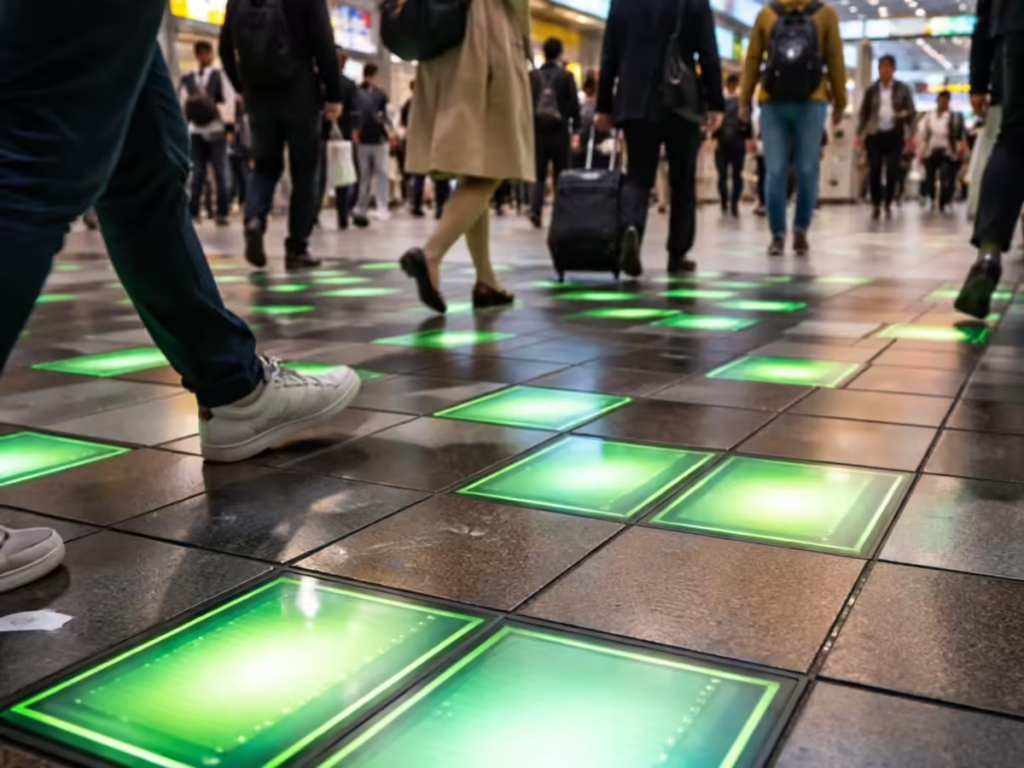
Cities around the world are searching for new ways to produce clean energy as urban populations grow and sustainability goals become more urgent. While solar panels and wind turbines remain the most visible forms of renewable power, engineers and urban planners are beginning to experiment with smaller energy systems embedded directly into the built environment.
Japan has emerged as one of the countries exploring this idea most actively by experimenting with systems that convert human movement into electricity. At first glance, the concept may seem unusual. Yet in densely populated cities where millions of people move through train stations, shopping districts, and public spaces every day, even small bursts of energy can accumulate into something useful.
This approach reflects a broader effort to build smarter urban environments, where technology is integrated into everyday infrastructure to improve efficiency, reduce emissions, and make cities more sustainable.
The Science Behind Footstep Electricity
The technology that makes footstep electricity possible relies on the piezoelectric effect, a scientific principle discovered by physicists Pierre and Jacques Curie in 1880. Certain materials, including quartz crystals and specialized ceramics, generate an electrical charge when mechanical pressure is applied to them.
Piezoelectric tiles use this principle by embedding sensors and pressure-sensitive materials beneath the floor surface. When a person steps on the tile, the pressure compresses the material and produces a small electrical current. This energy can either be stored temporarily in batteries or used immediately to power nearby systems.
A single step produces only a very small amount of electricity, often estimated at around 0.1 watts under ideal conditions. On its own, this output is minimal. But in locations where thousands of people pass through the same space every hour, the accumulated energy can become large enough to power small devices such as LED lighting, digital displays, and environmental sensors.
In crowded urban settings, human movement becomes a constant and predictable source of kinetic energy.
Early Experiments in Tokyo
Japan began exploring footstep energy technology in the late 2000s, particularly in transportation hubs where pedestrian traffic is extremely dense. One of the most widely discussed examples is Shibuya Station in Tokyo, located near the famous Shibuya Crossing.
Shibuya is one of the busiest pedestrian zones in the world, with millions of commuters and visitors moving through the area every day. This constant movement made it an ideal testing ground for piezoelectric flooring systems.
Special floor tiles were installed near ticket gates and walkways to capture the pressure created by pedestrian footsteps. The electricity generated by these systems has been used to power small infrastructure elements such as LED indicators, digital information displays, and other low-energy systems inside the station.
Beyond energy production, the installations also serve another purpose. They demonstrate renewable technology in a visible way, showing commuters how everyday movement can contribute to sustainable infrastructure.
Similar experiments have appeared in locations such as Narita Airport, shopping centers, and exhibition spaces, where energy-harvesting floors are used both as practical systems and educational tools.
Footstep Energy and the Smart City Vision
The significance of Japan’s experiments lies less in the amount of electricity produced and more in the broader concept they represent.
Modern smart city strategies increasingly aim to transform urban infrastructure into active systems rather than passive structures. Instead of simply supporting movement or transportation, infrastructure can also capture data, improve efficiency, and sometimes even generate small amounts of energy.
Footstep electricity represents one example of this evolving approach. Instead of allowing kinetic energy from pedestrian movement to disappear, the technology captures and repurposes it.
In cities like Tokyo, where pedestrian activity is constant throughout the day, this approach offers a creative way to supplement existing renewable energy systems while encouraging public awareness about sustainability.
Global Interest in Kinetic Energy Infrastructure
Japan’s experiments have drawn attention from cities around the world searching for innovative approaches to urban sustainability.
Companies such as Pavegen, a British technology firm, have developed similar kinetic flooring systems designed to convert footsteps into electricity while also collecting data about pedestrian traffic patterns. These systems have been installed in airports, stadiums, shopping centers, and public events across multiple countries.
Although the electricity generated by each step remains small, the technology provides additional value beyond energy production. Smart flooring systems can track foot traffic patterns, giving urban planners insights that help improve transportation flows, retail layouts, and public safety planning.
This combination of energy harvesting and data intelligence reflects the growing role of technology in shaping the cities of the future.
The Limits of Footstep Power
Footstep electricity offers several advantages for urban environments.
First, the technology produces energy without direct carbon emissions, supporting broader sustainability goals.
Second, it encourages public participation in renewable energy by demonstrating how everyday human activity can contribute to power generation.
Third, it highlights how urban infrastructure can serve multiple purposes beyond its original function.
However, the technology also has clear limitations. The most significant challenge is the low energy output generated by each step, meaning installations must be located in extremely high-traffic areas to produce meaningful electricity. In addition, installation costs and long-term maintenance requirements can be higher than traditional infrastructure.
For these reasons, piezoelectric flooring is generally considered a supplementary energy solution rather than a primary power source. It works best when integrated alongside other renewable technologies.
The Future of Energy-Generating Cities
Despite these limitations, the concept behind footstep electricity reveals an important shift in how cities may approach energy in the future. Urban planners are exploring ways to integrate energy generation directly into everyday infrastructure, where sidewalks, transportation systems, and public spaces could capture small amounts of energy from daily activity.
When combined with advances in energy storage and smart grid systems, these technologies could help cities become more efficient and resilient. Japan’s experiments with piezoelectric flooring show how even small innovations can reshape the relationship between people and infrastructure.
In the long run, the path toward more sustainable cities may begin with something as simple as the steps people take every day.
For readers interested in broader leadership and innovation shaping global industries, The Leaders Worlds features insights and profiles of executives driving modern business.
Frequently Ask Question
What is footstep electricity and how does it work?
Footstep electricity refers to energy generated when pressure from human footsteps is converted into electrical power. This is typically achieved using piezoelectric materials that produce an electric charge when compressed.
Where has footstep electricity been tested in Japan?
One of the most well-known experiments took place in Tokyo at Shibuya Station, where piezoelectric floor tiles were installed in high-traffic areas to capture energy from pedestrian movement.
How much electricity can a single step generate?
A single footstep usually produces a very small amount of electricity, often estimated around 0.1 watts under ideal conditions. While minimal individually, thousands of steps in crowded areas can generate enough energy to power small systems like LED lights or sensors.
Can footstep electricity power entire cities?
No. Footstep energy is considered a supplementary energy source. It is mainly used for low-power infrastructure such as displays, lighting, and sensors rather than large-scale electricity needs.
Why are smart cities experimenting with kinetic energy technologies?
Smart cities are exploring technologies like kinetic flooring to make infrastructure more efficient and sustainable. Capturing energy from everyday movement allows cities to reduce waste and experiment with distributed energy systems.