
Silicon Valley is racing to build more powerful AI systems, but the Vatican is now warning that humanity may be moving faster than it can responsibly control the technology it is creating.
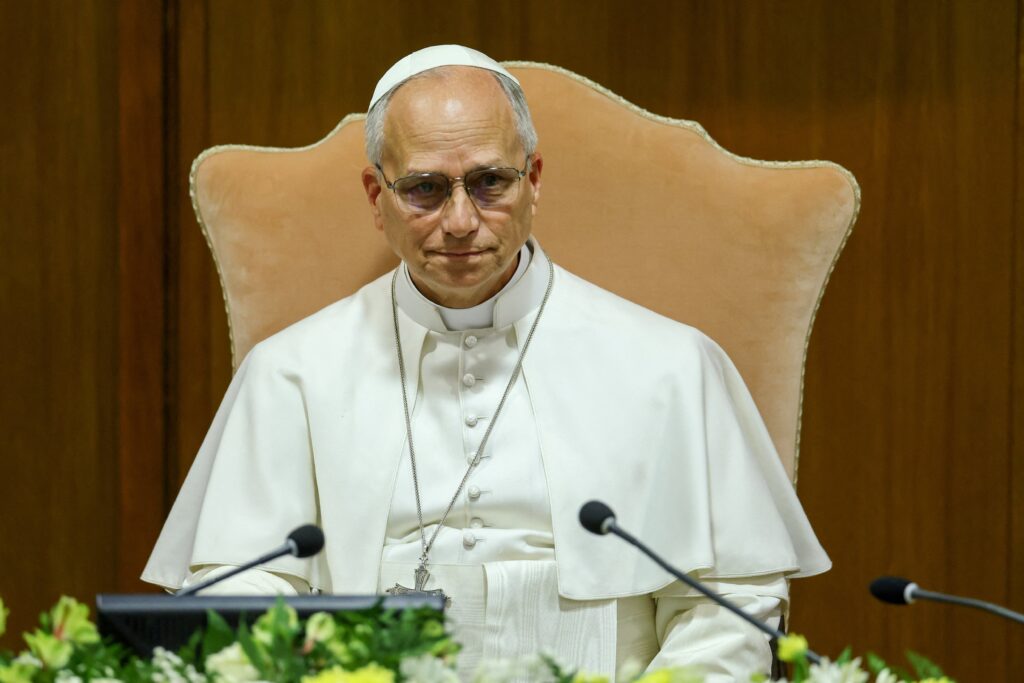
In his first major Vatican document, Magnifica Humanitas, released on May 25, Pope Leo XIV raised concerns about autonomous weapons, rapid automation, and the growing dominance of large technology companies in the AI race. The 235-page encyclical quickly gained global attention because it moves the AI debate beyond technology companies and into military policy, labor rights, and international governance.
According to IDC, global spending on AI infrastructure and AI-powered systems is expected to cross $630 billion by 2028 as governments and corporations continue accelerating AI adoption across industries. What initially appeared to be a technology competition is now increasingly shaping into a larger struggle over economic influence, security systems, and long-term global control.
AI Powered Conflict Systems
A central focus of the document was the rapid expansion of military AI systems and autonomous weapons. Pope Leo warned that some AI-powered weapons are becoming “practically beyond human reach” to govern effectively and stressed that machines should never independently make life-and-death decisions.
The encyclical argues that AI could make future conflicts more difficult to control because automated systems can react far faster than human judgment. Pope Leo also suggested that traditional “just war” thinking is becoming harder to apply in an era where algorithms increasingly influence battlefield strategy and military operations. This comes as governments continue investing heavily in autonomous drones, AI surveillance systems, predictive defense software, and automated combat technologies.
Global concern around autonomous weapons is also rising. More than 70 countries are currently involved in international discussions around lethal autonomous weapons systems, yet binding global restrictions still remain limited. Defense experts and UN-level discussions have repeatedly warned that automated military systems could reduce human reaction time during conflicts and increase escalation risks.
Silicon Valley’s AI Dominance
Another major issue inside Magnifica Humanitas was the concentration of AI power inside a small number of technology firms. Pope Leo warned that advanced AI infrastructure, cloud systems, algorithms, and massive datasets are increasingly controlled by a few “major economic and technological actors,” reducing transparency and weakening public accountability.
The document argues that AI governance cannot rely entirely on private corporations monitoring themselves. Instead, it calls for stricter legal frameworks, independent oversight, and stronger democratic accountability around AI systems. The criticism reflects growing concerns surrounding companies such as OpenAI, Google, Meta, Microsoft, Anthropic, Amazon, and Nvidia.
The scale of the current AI race has become enormous. Nvidia recently crossed a market valuation above $3 trillion as demand for AI chips and data center infrastructure continues surging worldwide. Meanwhile, Microsoft, Amazon, Google, and Meta are collectively investing tens of billions of dollars into AI infrastructure expansion this year alone.
AI Automation and Human Labor
The Vatican also warned that AI-driven automation could widen inequality and gradually reduce workers to “resources to be optimized” rather than individuals with dignity and social value.
Pope Leo criticized the hidden labor supporting the AI economy, including factory workers, rare earth mining operations, supply chain labor, and low-paid moderation workers handling digital platforms. He described some conditions inside the modern technology economy as “new forms of slavery,” warning that the world often celebrates AI innovation while overlooking the human cost behind the infrastructure powering it.
The concern reflects broader fears surrounding the future of work. The International Monetary Fund previously estimated that artificial intelligence could affect nearly 40% of jobs globally, with advanced economies expected to face the highest disruption from automation and generative AI systems. As companies continue aggressively pursuing efficiency and AI-led restructuring, fears are growing that economic systems may adapt faster than workers and governments can realistically prepare for.
The Global Struggle Over AI Control
A notable moment during the Vatican presentation was the appearance of Christopher Olah, co-founder of Anthropic, alongside Pope Leo. Olah acknowledged that AI companies often face commercial and geopolitical pressures that can conflict with responsible development and agreed that governments and outside institutions must play a larger role in oversight.
The Vatican compared today’s AI race to the biblical “Tower of Babel,” warning that humanity risks accelerating technological ambition faster than it can responsibly govern it. Recent findings from Stanford University’s 2026 AI Index also showed that AI systems are becoming significantly more capable across reasoning, coding, research, and autonomous task execution, increasing pressure on governments and regulators to strengthen oversight frameworks before the technology becomes even more deeply integrated into critical systems.
The broader message behind the encyclical is becoming increasingly difficult to ignore: the debate around AI is no longer only about innovation or productivity. It is increasingly about how much control societies are willing to hand over before the consequences become impossible to reverse.