
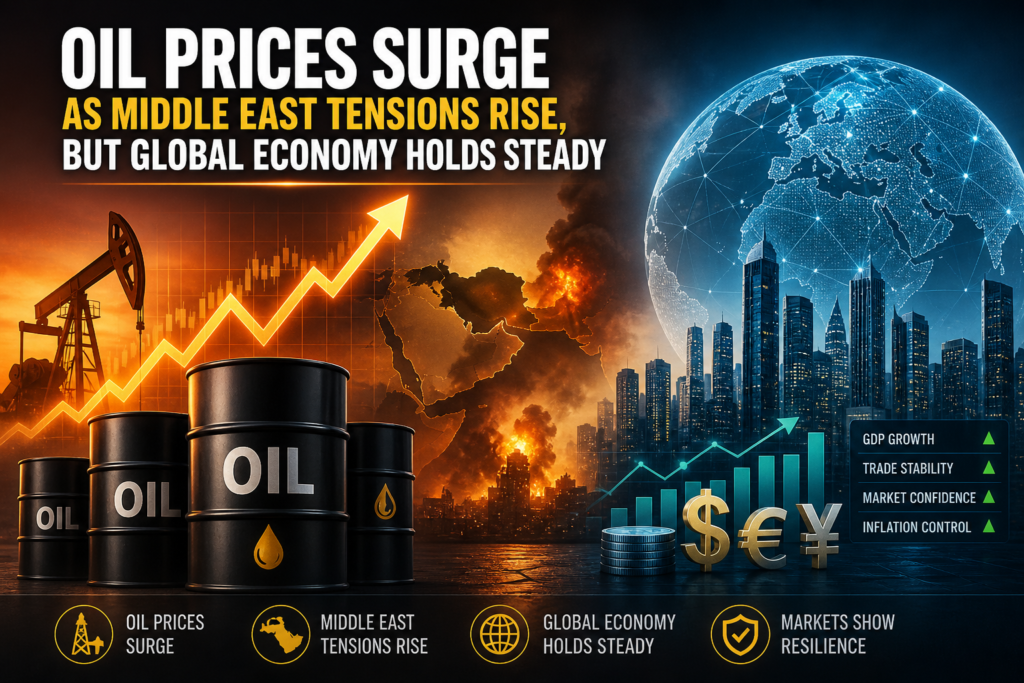
Global oil prices surged sharply on May 4, 2026, as tensions between the United States and Iran escalated near the Strait of Hormuz, one of the world’s most critical oil transit routes. Brent crude moved above $114 per barrel, driven by reports of missile threats, naval activity, and disruptions near key Gulf energy infrastructure.
The escalation has raised immediate concerns about supply disruption, placing global energy markets on alert. At the same time, financial markets remained cautious but stable, and economic activity across major regions continues without visible disruption.
Geopolitical Pressure Rises Oil Prices
The current price movement is being driven primarily by geopolitical risk and supply uncertainty rather than demand. The Strait of Hormuz carries roughly 20% of global oil supply, according to the International Energy Agency (IEA), making it one of the most sensitive choke points in the global energy system. Even limited disruption in this route can quickly tighten supply expectations and push prices higher.
Recent developments, including drone-related incidents near UAE oil facilities and tensions involving US naval forces, have increased the risk premium in oil markets. Earlier phases of the conflict had already disrupted large volumes of supply, with losses estimated at over 10 million barrels per day, based on assessments from the World Bank’s Commodity Markets Outlook (2026).
Hormuz Crisis Raises Global Risk
The Strait of Hormuz remains the central pressure point in the current situation. The conflict has slowed shipping flows, forced tanker rerouting, and pushed up maritime insurance costs. Available alternatives, including regional pipelines, are limited in capacity and cannot fully replace normal transit volumes through the strait.
Energy markets have responded quickly to these risks, with oil prices previously touching $120–$126 per barrel during peak tension periods, reflecting how sensitive pricing remains to supply threats.
Markets Stay Cautious
Despite rising oil prices, financial markets have not shown signs of panic. On May 4, global equities remained mixed, with US markets slipping slightly while several Asian markets held steady. Technology stocks and large-cap sectors continued to provide some support to overall market stability.
Volatility has increased, and central banks are closely monitoring inflation risks as higher energy prices begin to influence expectations across global markets.
Global Economy Shows Resilience
Global economic activity continues to hold steady despite the energy shock. The International Monetary Fund (IMF) projects global GDP growth at around 3.1% in 2026, indicating that overall economic momentum remains intact.
Several factors are helping absorb the impact:
- Improved energy efficiency compared to past decades
- Strategic petroleum reserves across major economies
- Diversified supply from non-OPEC producers
- Continued investment momentum, particularly in technology and AI-driven sectors
These factors are helping stabilize the broader economic environment even as energy markets remain under pressure, allowing global activity to continue without immediate disruption.