
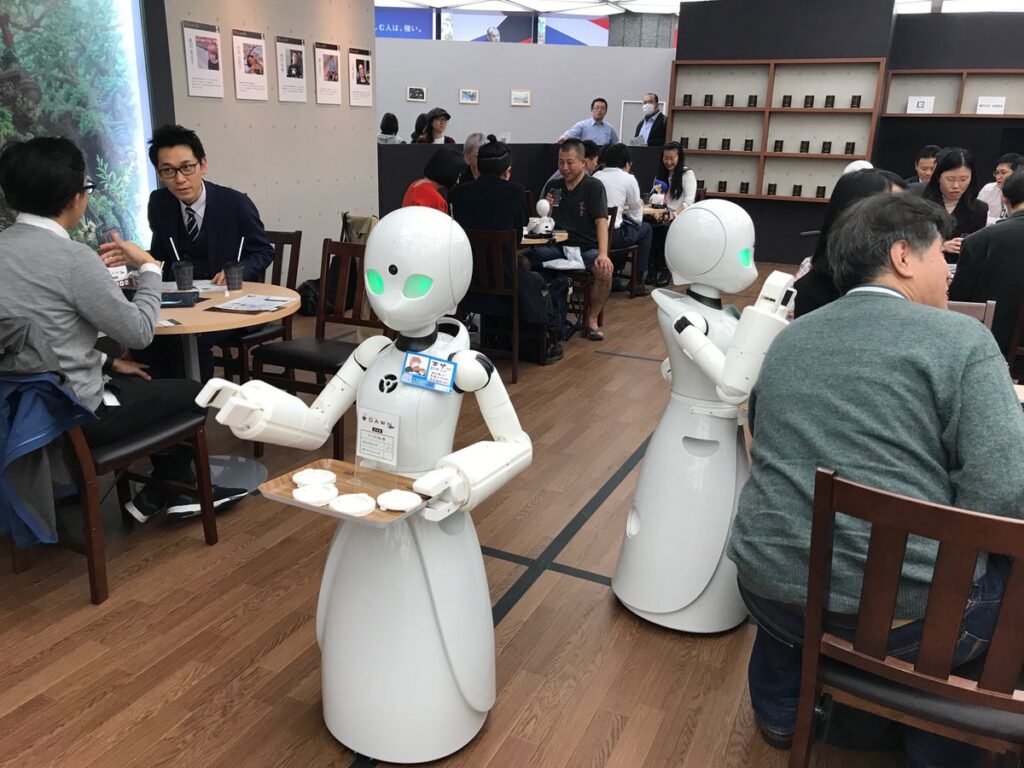
A cat-shaped robot delivers food across a busy restaurant in Tokyo. In a hospital nearby, an automated cart carries medicine between departments while nurses remain with patients. On the edge of the city, warehouse robots move packages across the floor because there are not enough workers to keep up with demand.
These scenes are becoming more common across Japan, but they are not simply signs of a country obsessed with technology. They are signs of a country trying to solve a growing workforce crisis.
Japan’s labor shortage is no longer limited to factories or construction sites. Restaurants are cutting opening hours, hospitals are struggling to hire caregivers, delivery firms cannot find enough drivers, and manufacturers are leaving equipment unused because they do not have enough people to operate it.
The country’s population is aging faster than almost any other major economy. Nearly one in three people in Japan is now over the age of 65, while the number of younger workers entering the labor force continues to shrink. By 2040, Japan could face a labor shortage of more than 11 million workers.
A Shrinking Workforce
Japan’s labor shortage has become much bigger than a recruitment challenge. It is starting to reshape the country’s economy. Construction companies are finding it difficult to replace experienced workers who are retiring. Manufacturers are struggling to keep production lines running at full capacity. Hotels, retailers, logistics companies, and transport operators are all competing for the same limited workforce.
Healthcare faces some of the most severe pressure. Japan is expected to need around 2.7 million care workers by 2040, yet current projections suggest the country could still be short by more than 570,000 people in the sector. That gap is already affecting everyday life. Nursing homes are limiting admissions because they do not have enough staff. Smaller hospitals are relying more heavily on part-time workers. Families are increasingly being forced to take on caregiving responsibilities that would normally be handled by professionals.
Japan is no longer debating whether automation will affect jobs in the future. It is already facing a reality where there are simply not enough people available to do the work.
Japan’s Expanding Robot Economy
Japan has been a leader in industrial robotics for years, but robots are now appearing far beyond factory floors. Restaurant chain Skylark uses thousands of robot servers to deliver food to tables and support staff during busy periods. Seven-Eleven has started testing delivery robots in Tokyo suburbs because driver shortages are becoming more severe. Hospitals are using robotic carts to move medicine, supplies, and equipment through hallways so nurses can spend more time with patients.
Warehouses are becoming more automated as well. Sorting systems, mobile robots, and storage machines are helping logistics companies manage rising e-commerce demand without relying entirely on human labor. Most of these machines are not replacing large numbers of workers. They are filling jobs that businesses can no longer fill on their own.
That is what makes Japan’s situation different from the automation debate in many other countries. In the United States and Europe, robots are often discussed as a threat to jobs. In Japan, they are increasingly viewed as a way to keep businesses operating despite a shrinking workforce.
The Limits of Elder Care Automation
The biggest challenge is not in restaurants or warehouses. It is in elder care. Japan’s aging population means more people need long-term support, medical assistance, and daily care. At the same time, there are fewer younger workers available to take those jobs.
This has pushed hospitals and care facilities to experiment with new forms of technology. A humanoid robot called AIREC is being developed to help lift patients, reduce the risk of bedsores, and support physically demanding care tasks. Other systems are much simpler but equally useful. Sleep-monitoring sensors can alert nurses if a patient has not moved for several hours. Automated medicine carts reduce the amount of time staff spend walking between rooms. Lifting devices can help caregivers avoid injuries caused by repetitive physical work.
Yet elder care is also where the limits of robotics become obvious. A machine can carry supplies, monitor a patient, or help move someone into a wheelchair. It cannot replace trust, empathy, conversation, or emotional support.
That is why many care facilities are moving toward a mixed model where robots handle repetitive physical work while caregivers focus on the human side of the job.
Why Japan Is Avoiding Large-Scale Immigration
Many countries respond to worker shortages by bringing in more foreign labor. Japan has been much slower to take that approach. The country has expanded foreign worker programs in healthcare, agriculture, and construction, but immigration remains politically sensitive. Large-scale immigration would create debates around housing, language, wages, and cultural integration.
Automation feels like a more stable solution. Robots fit naturally into Japan’s reputation for technology and engineering, and they allow companies to reduce labor pressure without changing the country’s social structure too quickly.
Still, there is a catch. Japan may soon face a shortage of people who can build, manage, and maintain these systems. The country is expected to need millions of additional workers in robotics, engineering, software, and automation over the next decade. In other words, Japan is trying to solve one labor shortage while creating another.
Conclusion
Japan is often seen as one of the world’s most advanced technology markets, but its growing dependence on robots is not really about innovation alone. It is about survival. The country is facing a future where there are not enough nurses, drivers, factory workers, construction staff, or caregivers to support daily life in the way people are used to. Robots are helping fill some of those gaps, but they are also showing how much of the economy still depends on human skills, emotional support, and trust.
Japan’s experience matters because it offers an early look at what many other countries may soon face. South Korea, Germany, Italy, and even China are already moving in the same direction as populations age and birth rates continue to fall.
The biggest lesson is not that robots will replace people. It is that countries may have to rethink how work is divided between humans and machines. Japan is not building a robot economy because it wants to. It is building one because it may not have any other choice.
Frequently Asked Questions
1. Why is Japan facing a labor shortage?
Japan is dealing with a shrinking workforce because of its aging population and low birth rates. Fewer young workers are entering the labor market while more older workers are retiring.
2. Which industries in Japan are most affected by labor shortages?
Healthcare, construction, logistics, manufacturing, retail, and hospitality are among the hardest-hit sectors. Elder care is facing some of the most severe worker shortages.
3. How are robots helping Japan solve its workforce problem?
Robots are being used in restaurants, warehouses, hospitals, factories, and care homes to handle repetitive or physically demanding tasks that businesses struggle to fill with workers.
4. Can robots completely replace human workers in Japan?
No, robots can support workers and reduce pressure, but they cannot replace emotional support, trust, communication, and human care, especially in healthcare and elder care.
5. Why is Japan using robots instead of relying more on immigration?
Japan has been cautious about large-scale immigration because of political and social concerns. Many companies see automation as a faster and more stable way to deal with labor shortages.