

Hiring feels different today. Not because companies suddenly forgot how to recruit, but because the foundation beneath hiring has shifted. Resumes are screened faster. Skills are mapped more precisely. Workforce plans look more sophisticated. And yet many leadership teams still feel a quiet uncertainty. Are we truly building the right capabilities for the future, or are we simply moving faster inside an outdated model?
Artificial intelligence now sits at the center of that uncertainty. It is not just supporting recruitment tasks. It is influencing how candidates are filtered, how skills are evaluated, and how future workforce needs are projected. In recent global enterprise surveys, a large majority of organizations report using AI in at least one stage of recruitment, and many cite measurable reductions in time-to-hire and screening costs. This is where AI workforce planning moves from being a technical upgrade to becoming a strategic layer inside the organization.
AI Is Quietly Reshaping Hiring
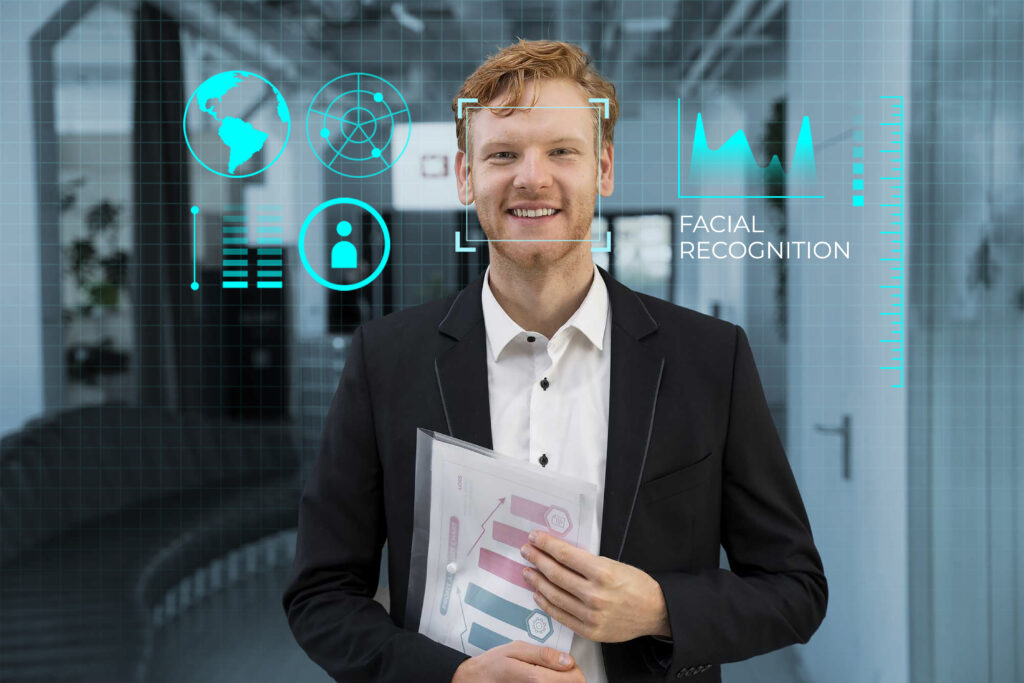
AI in hiring is no longer limited to resume screening or chatbot scheduling. Across global enterprises, artificial intelligence influences sourcing, ranking, and shortlisting decisions. Many large organizations now use AI tools in multiple stages of recruitment, with some reporting time-to-hire reductions of 25 to 40 percent after implementation. On the surface, this looks like progress in automation. Beneath the surface, it represents something more structural.
When AI systems refine candidate pools before human review, they shape the starting point of decision-making. Hiring managers are no longer choosing from a broad market. They are evaluating curated shortlists built on algorithmic signals. Those signals may include skill matching, behavioral data patterns, or predictive retention indicators. At the same time, demand for AI-related capabilities continues to grow globally, even in sectors where overall hiring has slowed. Companies are not only using AI in hiring. They are actively hiring for AI capability as part of long-term strategy.
The result is not less human involvement, but a shift in where judgment begins. Leadership must now understand how these systems define alignment and potential, because influence has moved earlier in the process. Hiring has evolved from a manual filter to an intelligence-driven system. That shift carries both opportunity and responsibility.
Skills Are Becoming the New Currency

At the same time, the definition of talent is changing. Traditional credentials and job titles are losing dominance as primary indicators of capability. Across global markets, skills-based hiring is expanding as companies seek flexibility in a digital economy. Labor market analyses suggest that when companies shift from credential-based screening to skills-based criteria, their addressable talent pools can expand significantly, particularly for digital and AI-enabled roles. AI makes this shift possible at scale by mapping capabilities across resumes, internal performance data, and assessment platforms.
This matters because skills evolve faster than job descriptions. Hybrid roles now require technical fluency, strategic awareness, and the ability to collaborate with AI systems. Major global employers are investing heavily in reskilling initiatives, redirecting existing employees toward AI-supported workflows rather than relying solely on external hiring. In some cases, workforce transformation strategies include reducing roles that are highly automatable while simultaneously increasing investment in digital, data, and AI-related expertise.
However, skill visibility alone does not guarantee advantage. Dashboards and capability maps can quickly become overwhelming if not tied directly to business priorities. The real value of skills-based hiring emerges only when it connects clearly to workforce planning strategy. Without that connection, data becomes noise rather than insight.
The Modern Approach to Workforce Planning

Traditional workforce planning operated on annual cycles. Headcount targets were set, budgets were approved, and adjustments followed later. AI workforce planning disrupts that rhythm by introducing continuous forecasting and scenario modeling. Modern systems analyze business growth projections, automation impact, and evolving skill demand to recommend whether organizations should build talent internally, hire externally, redeploy teams, or automate tasks.
In practice, leading organizations are moving from headcount planning to capability planning. Instead of asking how many employees they need, they ask which skills will be required under multiple business scenarios. Companies that redesign workflows around AI adoption, rather than simply layering tools onto existing processes, consistently report stronger productivity gains. The difference lies not in automation alone but in how talent strategy aligns with operational change.
Yet predictive modeling introduces new complexity. Forecasts depend on assumptions embedded in algorithms. Historical data can carry bias. Leaders must interpret AI outputs within business context rather than treating them as definitive answers. AI workforce planning expands visibility, but it does not remove accountability. The advantage lies in combining analytical precision with disciplined oversight.
A simple applied lens helps here. For each major workforce decision, leaders increasingly evaluate four options: build skills internally, buy talent from the market, borrow expertise temporarily, or automate tasks through technology. AI supports this evaluation, but final trade-offs remain strategic choices.
Governance, Regulation, and Global Accountability

As AI becomes embedded in hiring and workforce decisions, regulatory and ethical scrutiny is intensifying worldwide. In the European Union, employment-related AI systems are categorized as high risk, requiring transparency and strong human oversight. In the United States, bias audits and disclosure expectations are expanding at state levels. Multinational organizations increasingly adopt unified governance frameworks to maintain consistency across regions and protect long-term brand credibility.
Beyond regulation, trust has become central. Candidates want clarity about how automated systems evaluate them. Employees want assurance that algorithms do not quietly disadvantage certain groups. Investors expect governance structures that protect reputation and long-term value. Organizations that proactively audit AI systems and document decision logic are positioning themselves ahead of regulatory pressure rather than reacting to it.
AI workforce planning without governance may improve efficiency in the short term. With governance, it becomes sustainable and credible. The difference is not technological capability but leadership maturity.
The Evolving Role of Human Judgment

Despite automation, the human role in workforce strategy is not diminishing. It is evolving. AI can process vast datasets, detect patterns, and model future scenarios. It cannot fully interpret organizational culture, ethical nuance, or long-term leadership potential. Those dimensions still require human evaluation.
HR leaders are increasingly acting as interpreters of AI insights rather than administrators of manual processes. Recruiters are becoming talent strategists who assess context beyond algorithmic scoring. Workforce planners are transitioning into capability architects who align data-driven forecasts with strategic vision. Organizations that integrate AI successfully are not replacing people. They are repositioning talent to operate alongside intelligent systems.
The future of work is defined not by automation alone but by structured collaboration between human judgment and machine intelligence.
Conclusion
AI workforce planning is redefining how organizations approach hiring, skills, and long-term talent strategy. Practices that once functioned independently are now interconnected. AI in hiring influences skill visibility. Skills data informs workforce planning strategy. Continuous forecasting reshapes recruitment priorities.
The organizations that gain competitive strength are not those that adopt AI the fastest. They are those that understand how deeply AI shapes decision-making and manage that influence responsibly. They combine data with judgment, innovation with governance, and efficiency with long-term clarity.
In 2026, the future of work is not driven solely by technology. It is shaped by how thoughtfully leaders integrate AI workforce planning into the core of their business strategy.