
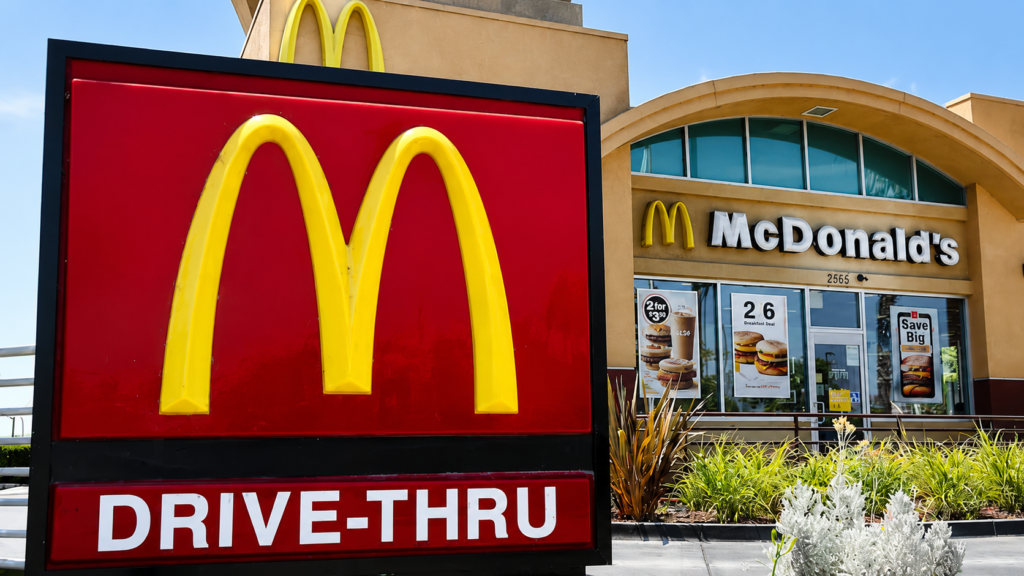
McDonald’s is once again testing artificial intelligence in its drive-thru operations, nearly two years after ending its widely discussed partnership with IBM. The company is currently piloting a new Google-backed platform called ArchIQ at select U.S. locations as part of its broader McDonald’s > NEXT strategy. Early reports indicate the system has already processed more than one million transactions, with most orders being completed without requiring human intervention.
While the headlines have focused on automated ordering, the broader significance of the initiative can be seen in how McDonald’s is using digital tools to improve day-to-day restaurant performance. McDonald’s latest initiative shows how global companies are using digital tools to improve efficiency, coordination, and decision-making across everyday operations. For a company operating more than 43,000 restaurants worldwide, even small improvements can have a measurable impact when applied across such a vast network.
McDonald’s Returned to Automated Ordering
McDonald’s previous drive-thru experiment offered a valuable lesson for the entire industry. The company spent several years testing IBM-powered automated order-taking technology across more than 100 U.S. locations before ending the program in 2024. Several ordering errors that circulated widely online raised questions about how effectively automated ordering systems could perform in busy restaurant environments.
However, McDonald’s chose to continue investing in automation. One noteworthy aspect of the company’s approach was how it responded to those challenges. The company appears to have used the experience to better understand where the technology could be improved and where it could contribute more effectively to restaurant performance.
That approach has become increasingly common among large organizations. According to research from McKinsey, companies generating the strongest returns from digital investments tend to focus on operational improvements and measurable business outcomes rather than technology adoption alone. McDonald’s latest initiative follows a similar pattern by connecting automation to restaurant performance instead of treating it as a standalone feature.
Beyond the Drive-Thru
The public conversation around ArchIQ focuses on its ability to take customer orders. However, restaurant operations involve far more than customer conversations.
Managing a global restaurant network requires coordination between staffing, food preparation, equipment, inventory, customer demand, and service quality. A delay in one area can affect the entire customer experience. This is where better visibility and faster decision-making can make a meaningful difference.
Reports surrounding the pilot suggest the platform is designed to support restaurant teams, assist managers, and provide better visibility into daily workflows. Those capabilities may ultimately prove more valuable than the ordering function itself. For businesses operating at scale, consistency is often one of the most difficult challenges to solve. Technology that helps teams identify issues faster and respond more effectively can deliver benefits that extend well beyond a single customer interaction.
This is particularly relevant in the restaurant industry, where labor shortages, rising operating costs, and growing customer expectations continue to put pressure on operators. According to the National Restaurant Association, the U.S. restaurant industry is expected to generate more than $1.5 trillion in sales in 2025 while continuing to face workforce and productivity challenges. Companies are increasingly looking for tools that help employees work more efficiently rather than simply replacing human involvement.
Smart Restaurant Operations
McDonald’s latest initiative also reflects a broader trend across the restaurant sector. Technology investments are no longer limited to mobile apps and digital menus. Restaurant companies are investing heavily in data platforms, automation tools, cloud infrastructure, loyalty programs, and operational software.
The scale of McDonald’s business helps explain why these investments matter. The company serves tens of millions of customers daily across more than 100 countries and territories. Managing that level of activity generates an enormous amount of operational data, creating opportunities to improve service speed, resource allocation, and overall efficiency.
Other major restaurant brands have been exploring similar opportunities. Automated ordering systems, digital kiosks, kitchen management software, and predictive analytics are becoming increasingly common across the quick-service sector. However, McDonald’s remains one of the most closely watched examples because of its size and global reach.
One important takeaway is that technology investments are becoming less visible to customers. The biggest gains often come from improvements happening behind the counter rather than at the point of purchase. Faster workflows, better coordination, and more informed decisions can influence customer satisfaction just as much as a new feature on a menu board.
Lessons for Business Leaders
McDonald’s latest initiative offers a useful lesson for organizations evaluating their own technology strategies. The strongest business results rarely come from deploying new tools simply because they are available. They come from identifying operational challenges and applying technology where it can create measurable improvements.
Many companies initially approached artificial intelligence as a customer-facing capability. McDonald’s current strategy suggests a more practical application. The focus appears to be on helping restaurant teams operate more effectively, improving consistency across locations, and supporting better day-to-day decision-making.
The significance of ArchIQ extends beyond the drive-thru lane. It demonstrates how businesses are increasingly connecting digital tools to everyday execution. McDonald’s latest pilot may be remembered less for the orders it processes and more for the operational lessons it provides. In a business environment where efficiency, consistency, and customer experience remain closely linked, those lessons could prove far more valuable than the technology itself.
Conclusion
McDonald’s latest pilot is ultimately less about automated ordering and more about improving how a large organization operates every day. The company is exploring ways to support restaurant teams, improve consistency across locations, and make day-to-day decision-making more efficient within a network of more than 43,000 restaurants worldwide.
The broader takeaway is straightforward. Technology delivers the greatest value when it helps solve practical business challenges. McDonald’s current experiment demonstrates how digital tools can strengthen everyday execution while keeping customer experience and operational performance at the center of the strategy.
Frequently Asked Questions
1. What is ArchIQ and how is it different from McDonald’s previous AI system?
ArchIQ is McDonald’s new Google-backed AI platform being tested at select U.S. locations. Unlike the earlier IBM pilot, it is designed to support both ordering and broader restaurant operations.
2. Why did McDonald’s end its previous AI drive-thru program?
The company ended its IBM partnership in 2024 after the system struggled with order accuracy in real-world drive-thru environments. Several ordering mistakes gained public attention and highlighted the challenges of automated ordering.
3. Is McDonald’s using AI to replace restaurant employees?
Current reports suggest the focus is on supporting restaurant teams rather than replacing them. The technology is being used to improve efficiency, coordination, and day-to-day decision-making.
4. Why are restaurant companies investing heavily in automation and digital tools?
Restaurants face ongoing pressure from rising operating costs, labor challenges, and growing customer expectations. Digital tools can help improve consistency, speed, and overall operational performance.